Brand launch guide
Private label vs white label soap: what changes for your brand?
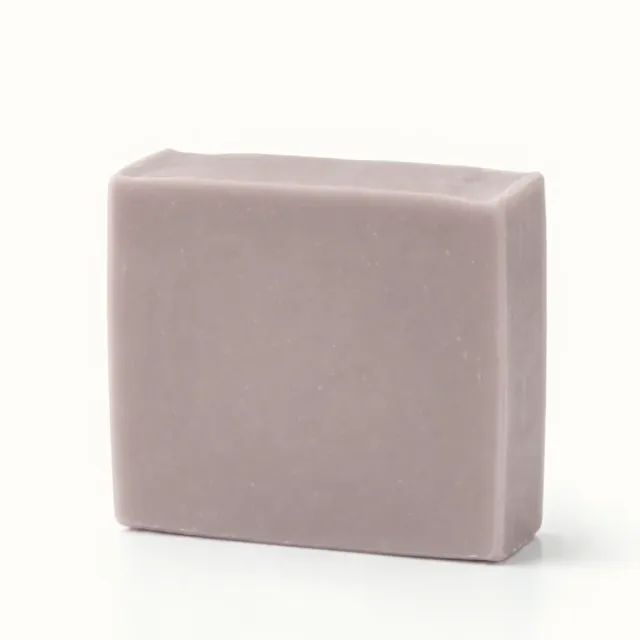
Suppliers use the terms differently, but at WTS they work the same way: order any catalog product in any quantity, unlabeled, and add your label or have us apply it.
Updated
Four ways to source soap for your brand
What each term usually means, and how it works at Wholesale Tallow Soap USA.
| Path | What it usually means | At WTS |
|---|---|---|
| Stock wholesale | Finished products you resell as they are | No minimum, except lip balm (50 tubes) |
| White label | One established formula, sold to many brands to rebrand | Ships unlabeled, ready for your labels or our printed boxes |
| Private label | An established formula, often with more say over branding or exclusivity | Works exactly like white label |
| Custom manufacturing | A formula developed around your brief | $250 pilot, then an order of 200 bars |
What is the difference between private label and white label soap?
It’s mostly about control, and suppliers don’t share one definition. White label usually means an established formula sold to many businesses to rebrand. Private label often implies more say over branding, packaging, assortment, or exclusivity.
Custom manufacturing is a different step, where the formula, scent, ingredients, or specification changes around your brief. At WTS, private label and white label work the same way, so your real decisions are who applies the label and whether you need a new formula.
How private and white label work at WTS
- Order any catalog product online. There’s no minimum, except 50 tubes for lip balm.
- It arrives unlabeled, ready for your own labels.
- Or we apply your labels or boxes for $0.75 each. The labels themselves come from us or your printer.
| Item | Cost |
|---|---|
| Label application by WTS (labor only) | $0.75 per label |
| Your own finished label design | $0 |
| Label or box design by WTS | $295.00 per design |
| Ribbon label (belly band) | About $0.15 |
| Printed label for our jars, tubes, and deodorant | Live price |
| Printed soap box | Live price |
To ship each order straight to your customers under your brand, use TallowPal, our no-minimum app; see tallow soap dropshipping. For every labeling option, see labeling and fulfillment.
When custom manufacturing makes sense
Choose custom when a defined customer need, ingredient, scent, formula, or specification can’t be met by the catalog, and your volume justifies development.
A custom formula starts with a $250 pilot per formula: one pilot batch, up to two physical samples, one consolidated revision round, and up to two revised samples. Production is an order of 200 bars. See custom tallow soap manufacturing.
Questions to ask any supplier
- What can change? At WTS, your label and packaging. A formula change is custom work.
- Is there a minimum? Not on catalog products. A custom formula needs an order of 200 bars.
- Can products mix toward a volume tier? Yes. All soap bars count toward one tier.
- What’s the lead time? It depends on the product and quantity. See our Production and Curing Policy.
Planning the whole launch? Work through the tallow soap brand launch checklist.
FAQ
Private and white label questions
Still have a question? Call 612-208-6516 or email hello@wholesaletallowsoapusa.com.
Is private label soap exclusive?
Not automatically. Exclusivity has to be stated in your supplier agreement, and an established formula may be sold to several brands, each with its own label.
Which path is fastest?
Stock wholesale, or private or white label on an established formula, is usually faster than custom development. Inventory, packaging, quantity, production, and shipping still set the timing.
Does WTS apply the final labels?
Yes, if you want us to. Once you have your labels or boxes, printed by us or your printer, we apply them for $0.75 each. Your own finished design costs nothing extra, and label or box design by WTS is $295.00 per design.
Put your name on it
Start private label with no minimum
Order any catalog product online (lip balm starts at 50 tubes). Label it yourself, or have us apply your labels.
- Ships unlabeled, ready for your label
- Your labels or boxes: ours at live prices or yours, $0.75 each to apply
- Your own finished design costs nothing extra