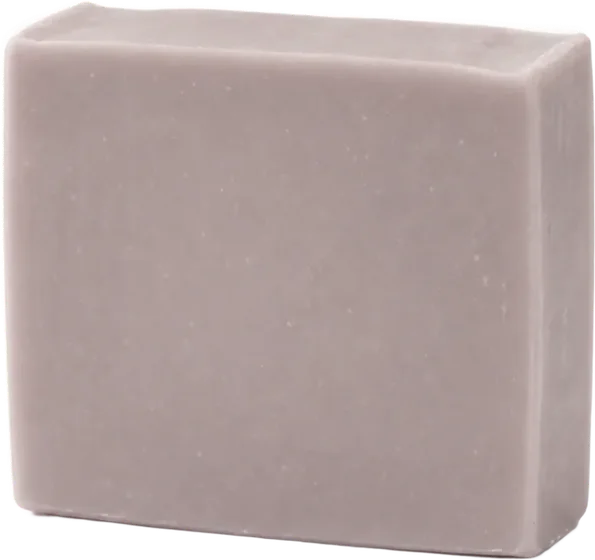
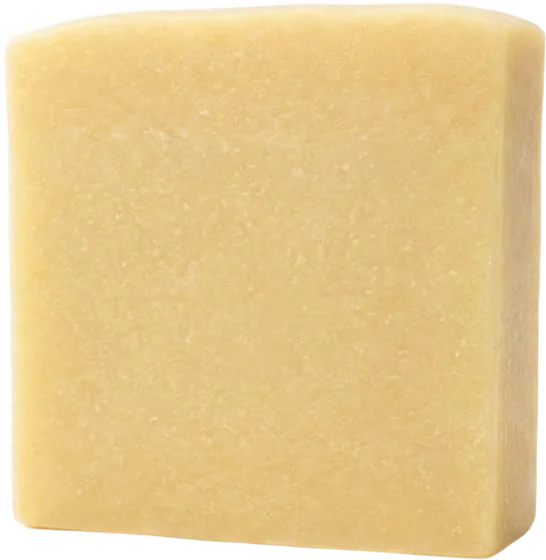
Private-label buyer guide
Your tallow soap brand launch checklist
Plan a branded tallow soap line without guessing. Start with catalog bars that have no minimum, put your label on them, and grow what sells.
- No minimum order
- Ships unlabeled
- Custom labels and boxes
- $3 samples
The launch facts, up front
Tap any card for the details.
-
Private-label questions
MOQ
None on soap. Private label works in any quantity.
-
Choose your model
Bars arrive
Unlabeled, ready for your label or box.
Ours at live prices or yours. Applying each one is $0.75.
-
Landed cost
Labels and boxes
Ours at live prices, or yours.
Printed BOPP labels and soap boxes online, ribbon labels (belly bands) about $0.15 each. Applying each one is $0.75.
-
The launch checklist
Samples
$3 for 2 oz soap or 1 oz lotion, any scent.
-
What each bar costs
Soap price
$4.80 down to $3.25 per 4 oz bar.
All scents share one tier.
-
When custom makes sense
Custom formula
200 bars, only when no catalog bar fits.
Choose your model
Private label uses our catalog. Custom changes the formula.
Pick the path that gives you enough control without adding work you don’t need yet.
-
Stock wholesale
Sell our bars as they are. You control the assortment and how you merchandise it.
Shop the catalog -
Private label
The same bars under your brand. Get your labels, or our printed boxes at live prices, then apply them yourself or have us do it for $0.75 each.
How private label works -
Custom formula
A formula developed from your brief. It starts with a $250 pilot and requires an order of 200 bars.
Custom soap manufacturing
Private label or white label? They work the same way here: any catalog product, any quantity, labeled by you or by us.
The checklist
Six decisions that keep your launch focused
Settle these before your first order, and the launch stays small enough to learn from.
-
Step 1
Name the buyer
Choose the customer and where they shop. A boutique gift shelf needs a different mix than an online tallow brand.
-
Step 2
Keep the first assortment tight
Start with a few distinct scents, and give each one a clear job in the line.
-
Step 3
Handle the bars
Scent, look, and texture are easier to judge in hand. Soap samples are 2 oz for $3 in any scent.
-
Step 4
Choose who labels
Get your labels, or our printed boxes at live prices. Apply them yourself after delivery, or have us do it for $0.75 each. Your finished design costs nothing extra.
-
Step 5
Order what you can sell
There is no minimum, and all soap bars count toward one volume tier, so a mixed order still earns the better price.
-
Step 6
Plan the next order now
Decide which sales signal triggers a reorder, a bigger tier, or a custom formula.
Landed cost
The bar price is only one part of your cost
Add up the full cost of each sellable unit before you set a retail price.
Soap
$4.80 per standard 4 oz bar at 1 to 49, down to $3.25 at 2,000+.
Labels and boxes
Ours at live prices, or yours. Applying each one is $0.75, only if we do it.
Your design
$0 to use your own finished design.
Shipping
Calculated at checkout.
Samples
$3 for soap and lotion.
Dropshipping
Through TallowPal, label included in the unit price.
Order printed labels and boxes online
Printed labels for our jars, tubes, and deodorant, and printed boxes for our soap bars, have live prices on their own pages. Ribbon labels (belly bands) run about $0.15 each. Thank-you cards and other packaging are priced from these five things:
- Material
- Quantity
- Colors
- Design
- Size
Live prices online
- Printed labels100+ per design at live prices
- Soap boxes25+ boxes at live prices
- Ribbon labelsBelly bands, about $0.15 each, a typical example
Printed labels and boxes ship free within the lower 48 states, on their own. Other printers may add setup fees or print minimums.
Then add your side: payment or marketplace fees, assembly and storage, and sampling and marketing. Leave room for a retailer’s margin if another store will sell your bars.
When custom makes sense
Move to custom when the catalog is the constraint
Custom isn’t automatically the better path. It fits when demand is clear and no catalog bar matches your brief. It starts with a $250 pilot and requires an order of 200 bars.
- You can explain exactly why the catalog isn’t enough
- You know the customer and the sales channel
- You have a realistic volume and launch plan
- You’re ready to approve the INCI declaration, measured pH, and specifications
FAQ
Private-label questions
Still have a question? Call 612-208-6516 or email hello@wholesaletallowsoapusa.com.
Is there a minimum order for private label?
No. Private label uses our catalog products, which have no minimum except lip balm (50 tubes). Order soap in any quantity and label it yourself, or have us label it.
Can different scents count toward the same price tier?
Yes. All soap bars count toward one combined tier. Lavender, Woodsy, Citrus & Lemon, and Coffee have their own price at each tier because they cost more to make.
Do the bars arrive with my labels?
Only if we apply them. Stock bars ship unlabeled. Order printed boxes for your bars on our custom soap boxes page, or use your own labels, and we can apply them for $0.75 each.
Can you design my labels?
Yes. Our team designs custom soap boxes and printed labels for $295.00 per design, and we quote other label design. Using your own finished design costs nothing extra.
How long does a private-label order take?
It depends on the products, quantity, and labeling. Soap bars can ship before they finish curing; we recommend 2 to 4 weeks of curing from the production date before you sell them. See our Production and Curing Policy, and ask before you order if you have a launch date.
Can I order specific samples?
Yes. Soap samples are 2 oz for $3 in any scent, specialty included, and lotion samples are 1 oz for $3. Pick them from the sample list, add them to your cart, and check out. Shipping is calculated at checkout, before you pay.
Where does the tallow come from?
Our tallow soap is made with pasture-raised, grass-fed, grass-finished tallow from small US family farms. See Our Tallow Standard.
Is your tallow lab tested?
The tallow in our body care and grass-fed bulk tallow is. Lot 26190 of the tallow in our tallow body care and Bulk Grass-Fed Grass-Finished Suet Tallow was tested by Light Labs, an ISO/IEC 17025-accredited lab, with results released July 31, 2026: moisture 0.17%, peroxide value 7.4 meq/kg, and no E. coli, Salmonella, or Staph aureus detected. The results cover one lot of tallow, not finished products, and the full certificate is available to wholesale and brand customers on request. Our bar and liquid soap use a separate grass-fed, grass-finished tallow, summarized from our soap tallow supplier’s certificate of analysis (fatty acid profile by GC/MS, March 2026) in our soap tallow fact sheet. See our tallow test results and specification.