Custom balm formulas
Custom tallow balm formulation and manufacturing, made to your brief
Your custom tallow balm starts with a $250 pilot, built around the texture, ingredients, scent, and jar you want. Approve the samples and specs, then place an order of 200 units.
- $250 pilot per formula
- 200-unit minimum order
- Texture, scent, and jar to your brief
- Grass-fed tallow, handcrafted in the USA
Custom balm, answered in one screen
Tap any card for the details.
-
The custom balm minimum
MOQ
200 units, only for custom balms.
Stock balms have none.
-
What the pilot includes
Pilot
$250 per formula, with up to two samples.
-
Revision rounds
Revisions
One round included.
Extra rounds are $125 each plus shipping.
-
What you can customize
What you choose
The formula: texture, ingredients, scent, and jar.
-
How our price promise works
Production price
Quoted after the pilot. We beat any written US quote.
Same quantity, comparable formula and packaging.
-
Stock balms with no minimum
Stock balms
From $9: 13 formulas, any quantity.
No minimum.
The pilot
Test your balm before you commit to 200 units
The pilot turns your brief into physical samples you can open, feel, and smell. Production is quoted once you approve the result.
Start with a pilot
$250 per formula
- One pilot batch
- Up to two physical samples
- One consolidated revision round
- Up to two revised samples
- BriefTell us your idea
- PilotSamples and a revision
- ApproveINCI and specs
- ProduceFrom 200 units
Extra revision rounds are $125 each plus shipping. Prototype shipping is billed at actual cost.
What you can customize
Shape every part of the balm, from texture to jar
Put these four choices in your brief, and we build the pilot around them.
-
Texture and finish
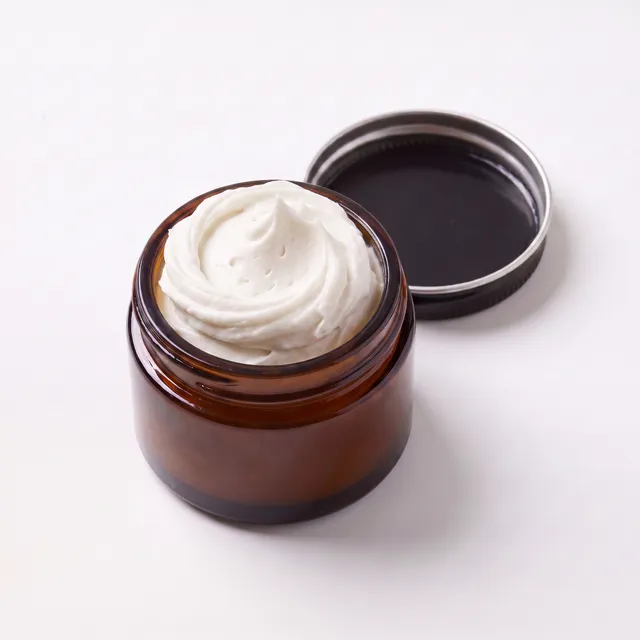
A dense salve, a softer balm, or a whipped texture.
-
Oils, waxes, and botanicals
Name the ingredients you want, and any to leave out.
-
Scent or unscented
No scent at all, or a scent direction that fits your customer.
-
Fill and package
The jar, fill weight, and label area, matched before production.
Before production, you approve the INCI declaration, the measured pH where it applies, and the agreed specifications. Then we quote your production order.
Not ready for 200 units?
Start with a stock balm, in any quantity
Sell our balms as they are, or add your own label. There is no minimum, and volume discounts start at 12 units.
- Tallow Balm: 13 formulas, 1 oz from $9, 2 oz from $13
- Tallow & Honey Whipped Balm: 1 oz $9, 2 oz $13
- Coffee & Tallow Eye Balm: 1 oz $10, 2 oz $15
- Every balm jar counts toward one total for each discount, any balm or size
- Your labels: ours at live prices or your printer’s, $0.75 each to apply
FAQ
Custom balm questions
Still have a question? Call 612-208-6516 or email hello@wholesaletallowsoapusa.com.
Should I buy a stock balm or develop a custom one?
Buy stock when one of our formulas, sizes, and jars already fits your brand. Choose custom when you need a texture, ingredient list, scent, or package the catalog doesn’t offer. Already selling a tallow line? See how we work with tallow entrepreneurs.
What is the minimum for a custom balm?
An order of 200 units. It applies only to custom formulas, so you can order stock balms in any quantity and go custom later.
Will you beat another manufacturer’s quote?
Yes. Send us a written quote from another US manufacturer, dated in the last 30 days, for 200 units or more. If the formula and packaging are comparable, we beat its per-unit price for the same quantity. The $250 pilot is separate. See how the price promise works.
Can I choose the ingredients?
Yes. Name the oils, waxes, botanicals, and scent you want in your brief, plus anything to leave out. The INCI declaration you approve lists every ingredient.
What if I need more than one revision round?
Each extra round is $125 plus shipping. Send all of your feedback on the samples as one consolidated list, so each round counts.
Do I get the formula percentages?
Not by default. You approve the full INCI declaration, but exact percentages and manufacturing methods stay confidential unless a license or transfer is agreed in writing.
How long does a custom balm take?
It depends on the formula, package, and quantity. Include your launch date in your brief, and see our Production and Curing Policy.
Is the balm made with grass-fed tallow?
Yes. Our tallow body care is made with pasture-raised, grass-fed, grass-finished tallow from small family farms and handcrafted in the USA.